

India’s cruise journey is set to sail and make waves with the launch of the ambitious five-year Cruise Bharat Mission last September. Charting a bold new course, the mission reflects Prime Minister Narendra Modi’s conviction that cruise tourism is not just a leisure industry—but a powerful engine for jobs, local livelihoods, and regional economic growth.
In 1844, British company P&O Cruises offered the first leisure cruise from Southampton to the Mediterranean, considered the birth of cruise tourism in Europe.
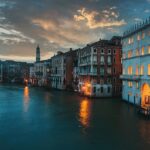
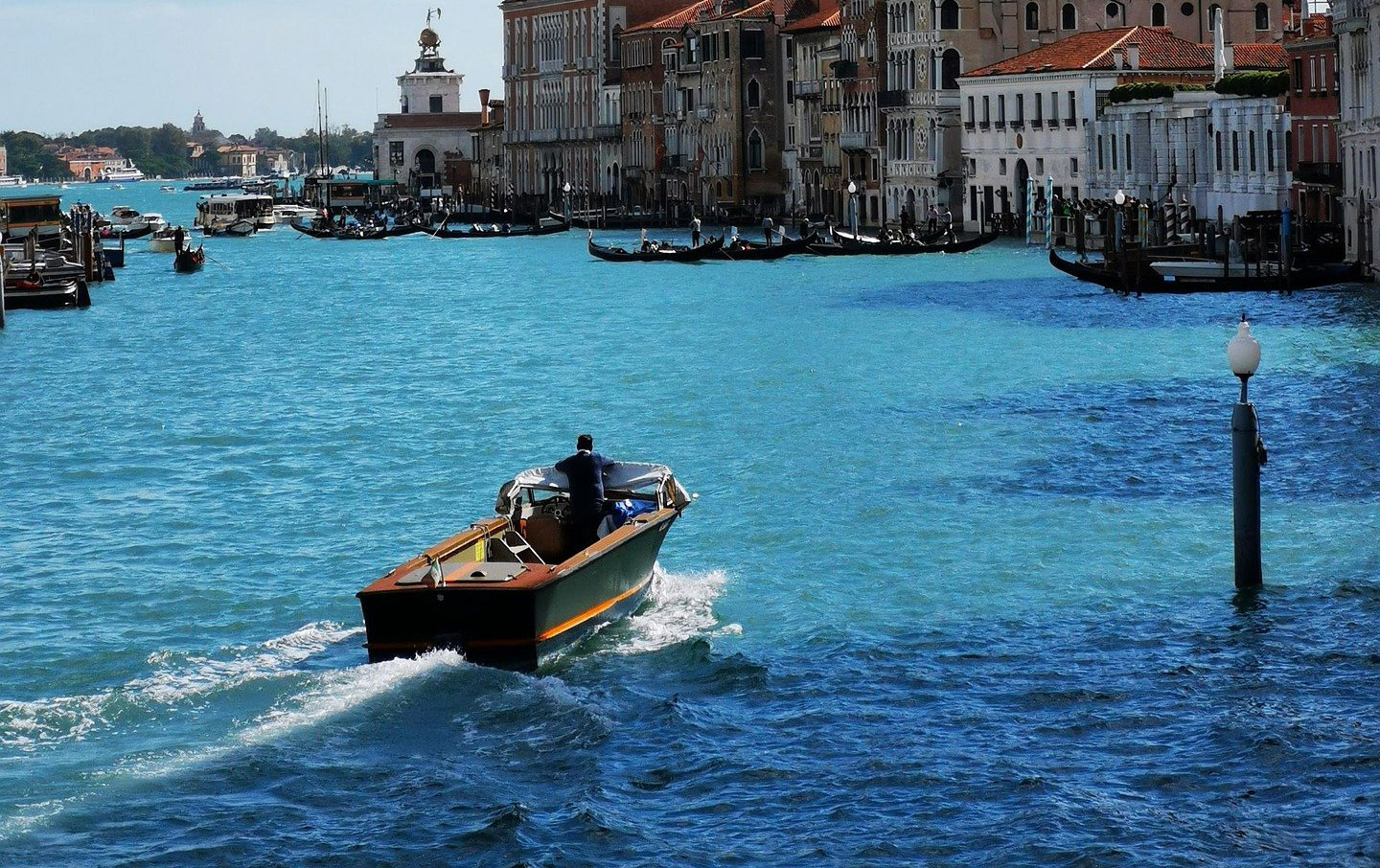
The year 1900 saw the birth of first purpose-built cruise ship, Prinzessin Victoria Luise (Germany) marking the start of luxury sea cruise tourism. Titanic tragedy of 1912 showcased importance of maritime safety regulations in passenger shipping. Cruises and passenger shipping thrived as the only mode of long-term travel. In 1950s–60s, Mediterranean cities like Venice, Naples, and Barcelona become popular port calls as ocean liners shift to tourism-focused voyages.
1960’s also saw a rise in trans-Atlantic air travel, which resulted in decline in ocean liners and a shift to leisure voyages instead of passenger transport. These leisure cruises created luxury amenities and planned itineraries having as many port calls as possible within one sailing. In 1966
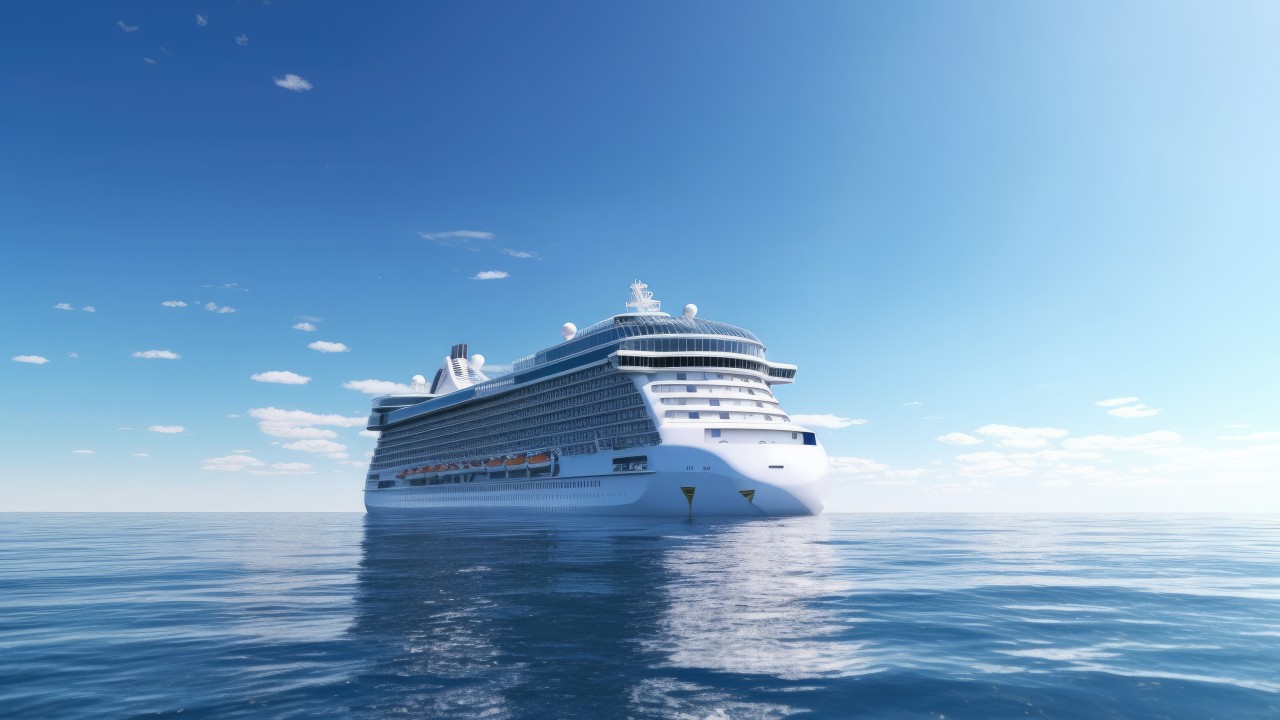
Norwegian Caribbean Line (now NCL) launched the modern cruise vacation model with short, round-trip Caribbean cruises. Gradually new cruise lines were born catering to different segments including the affordable mass market cruising. In late 1980’s a trend of Mega Cruise Ships started with the likes of the Sovereign of the Seas (1988) by Royal Caribbean International with 2850 guests. This trend continues with the Royal Caribbean International launching the Icon of the Seas in 2024 – the largest cruise ship in the world with a capacity of 7600 passengers. Mediterranean and Caribbean become the most popular regions for cruise calls.
1990s see Southeast Asia emerging as a cruise destination, with Singapore positioning itself as a key hub for regional cruise lines. Star Cruises (Genting Group) in 2001 becomes the largest Asian cruise operator, expanding into China and India, boosting intra-Asia cruising. Asia Pacific and Middle East have also now emerged as major cruise destinations.
Simultaneously, a new trend of expedition cruise emerges with smaller cruise ships and superyachts. Expedition cruising started with tourist voyages to the Antarctic. Today a variant of expedition cruising, the boutique luxury cruise takes you to remote islands with exotic beaches and natural scenic locations. These boutique ships are self-sufficient, requiring little to no terminal infrastructure and other support from Ports. River cruises started becoming popular from Europe.
P&O started passenger services in India in 1911, linking Bombay (Mumbai) to Aden, Suez, and Europe as the early precursor to cruise tourism. Several ports in India, including Mumbai, Kochi, Chennai, Goa, Mangalore, Porbandar, Tuticorin, Lakshadweep, Andaman & Nicobar Islands have seen cruise calls from International Cruise lines since the 1990s.
India’s market of more than 1.4-billion people, allowing for a potential penetration of less than 0.05%, can produce about 7-million+ potential cruise passengers.
Sensing this opportunity, the central government started giving a strong push to Cruise tourism through a series of interventions since 2016. A uniform tariff rate across all major ports and cabotage relaxation sent a strong signal to international cruise fraternity. All major international cruise lines like MSC, Costa, NCL, Celebrity, Ponant, Silverseas, etc. have been coming regularly to Indian Ports.
Domestic cruises like Jalesh (cruise ship Karnika) and Angriya cruises between Mumbai-Goa operated successfully Pre-Covid. Jalesh even had voyages to Sri Lanka and Dubai. Costa cruises had its ship Victoria Coast homeported at Mumbai moving on West Coast of India including ports at Colombo and Male.
Post the pandemic, Cordelia Cruises homeporting from Mumbai is operating Empress ship for voyages to Goa, Kochi, Mangalore and Lakshadweep islands. During the monsoons, it homeports at Chennai for cruises on east Coast including Vizag and also to Sri Lanka. Costa Serena homeported at Mumbai for west coast route in 2023-24 cruise season.
There has been a significant rise in domestic as well as international cruise tourism. Cruise season 2023-24 had 4.70 lakh Ocean cruise passengers. Due to the Red Sea crisis we are witnessing major international cruise call cancellations in the last two cruise seasons.
India has both the numbers and the aspiration to drive cruise tourism. A 2016 study by the Indian Ports Association (IPA) projected over 4 million cruise passengers by 2042, with 80% expected to be domestic travelers. To meet this potential, India has focused on strengthening both hard and soft infrastructure. New cruise terminals have been developed at Vizag, Chennai, New Mangalore, and Kochi, with Mumbai now hosting the country’s largest state-of-the-art terminal, capable of handling over 10,000 passengers daily. Goa’s terminal is nearing completion. Both Goa and Mumbai terminals will be operated under a 30-year public-private partnership, expected to bring operational efficiency and enhance the passenger experience. On the softer side, standard operating procedures have been implemented across immigration, customs, ports, PHO, and CISF to ensure a smooth and hassle-free journey for cruise travelers.
Recognizing that cruise tourism needs a mission-mode push, the government launched the Cruise Bharat Mission to unlock India’s full potential. The initiative spans ocean, river, and island cruises, and promotes marina development—as yachting and sailing emerge as aspirational pursuits for today’s Indian youth.
The Cruise Bharat Mission has been conceived as a centralized secretariat at IPA. Ministry of Ports, Shipping and Waterways will drive this mission through an Apex Committee ably guided by a high-level advisory committee and a Cruise Implementation Taskforce. These committees will drive decision-making and national initiatives on various fronts such as sustainable infrastructure and capital, technology enabled operations, cruise promotion and circuit integration, regulatory, fiscal and financial policy, capacity building and economic research.
The five-year Cruise Bharat Mission has a comprehensive vision for the development of cruise tourism in India. It aims to achieve 1 million Ocean cruise and 1.5 million River cruise passengers by 2029. It would develop 10 ocean cruise and 100 river cruise terminals, besides aiming for five Marinas.
The Cruise Bharat Mission will develop technical templates and standards for globally competitive and sustainable cruise terminals. It will also develop model concession agreement for various PPP concessions. A national cruise infrastructure master plan will also get created looking at the types of cruise ships that will call on Indian ports. A national Cruise passenger clearance procedure and a fully digitalized customs duty system is planned to be created.
The Cruise Bharat Mission sets bold and ambitious targets, but several challenges must be addressed to realize its full potential. India needs to cultivate a cruise-friendly culture across its ports and destinations. At present, many major ports lack dedicated cruise berths—with Vizag and Goa being notable exceptions. If India aims to significantly scale up cruise ship calls and passenger volumes, it must invest in developing a few key ports that can homeport multiple vessels, support efficient turnarounds, and enable open-jaw itineraries.
Globally, around 40% of cruises span seven days, while the Indian traveler still prefers shorter 3–4-day sailings. International cruise hubs like Barcelona and Miami thrive by offering a cluster of destinations—Barcelona connects to Mediterranean hotspots like Marseille, Cannes, Rome, and Ibiza, while Miami links to the Caribbean and Bahamas. For India to succeed, its destination development strategy must align with the mindset of cruise itinerary planners, ensuring port clusters are attractive, accessible, and operationally seamless.
As part of a national strategy, the government should take a lead role in promoting cruise destinations. Building the Cruise Bharat brand requires focused consumer education and awareness to foster a culture where Indians see cruising as a viable holiday option. Currently, we underinvest in events and fail to highlight our destinations and progressive policy shifts.
Cordelia cruises is real success story of a domestic cruise company in India. Still, we are finding hard to get other international Cruise lines convinced for domestic sailings in India. Norwegian Cruise Line (NCL) partnership with Cordelia to homeport a few ships in the next four years in India is a welcome sign. Removing some bottlenecks on the fiscal front may entice some more cruise lines.
For aspiring cruise lines, ship acquisition is a major upfront cost. Fiscal incentives or the IFSCA route can ease this burden, especially as the ecosystem is still maturing. Time-bound tax benefits on onboard revenues can further reduce operational risks, encouraging both domestic deployment and financing in this sunrise sector.
To make domestic cruise sailings more cost-effective and environmentally sustainable, the government should consider providing affordable shore power. As a pilot, the popular Mumbai–Goa–Kochi–Lakshadweep corridor could be developed as a green cruise route. Since over 40% of a cruise ship’s fuel is consumed while docked, reducing bunker fuel usage through cheaper shore power can significantly lower operating costs and enhance financial viability.
No matter how luxurious the cruise ship, shore excursions remain the key driver of ticket sales—and this is where India has a unique edge. The country’s rich heritage and temple tourism potential offer compelling experiences. Imagine a wellness circuit with Kochi as the homeport, a spiritual itinerary covering Somnath, Dwarka, and other sacred sites in Gujarat, or island cruises to Lakshadweep and the Andamans. Puducherry, already a global destination, holds strong potential as a southern cruise port. The Varanasi–Kolkata river cruise has proven the model—thanks to the timeless allure of the Ghats and cultural richness along the Ganga.
Yet, a cruise tourist typically has just 8–10 hours ashore. To make those few hours memorable, the experience must be seamless and well-coordinated. The biggest challenge is aligning central and state agencies to ensure smooth on-ground delivery. Destination tour operators play a key role in bundling attractions and services into cohesive experiences. At the same time, not every tourist books a package—so cities must offer basic, accessible infrastructure: hop-on-hop-off buses, clean pedestrian paths, reliable taxis, and hygienic public washrooms. These details matter. They define the tourist’s impression of India—and what she remembers, shares, and recommends.
The cruise terminal infrastructure, initially, should try to cater to the basic needs of cruise lines because the cruise passenger doesn’t want to stay at the terminal, but has to experience the destination. Therefore, starting with a lean infrastructure model can help us move faster.
Cruise tourism offers exponential economic returns, making the investment of time, money, and policy well worth it. With Cruise Bharat, the Government of India is institutionalizing this momentum. It’s now time for central and state agencies, private players, and startups to drive the next voyage of new possibilities.